Daisy Flower Handwritten Font for Crafters & Sellers
If you've ever spent 20 minutes scrolling through font libraries searching for that *just-right* handwritten script—one that feels personal but polished, sweet but not saccharine, friendly but still professional—you already know how rare it is to find a display font that truly delivers. Daisy Flower isn’t just another script font. It’s the kind of typeface that makes your candle label feel like a love note, turns a simple printable planner page into something customers bookmark and print twice, and gives your wedding welcome sign that effortless, sun-dappled charm.
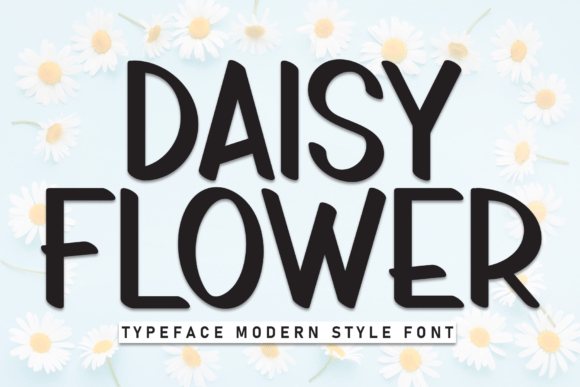
Daisy Flower lives in the sweet spot between whimsy and wearability. Its letters flow with gentle, natural variation—like inked by hand, not generated by algorithm—but every curve is intentional, every baseline consistent. There’s warmth in its slant, clarity in its spacing, and quiet confidence in its rhythm. As a Script Amp font, it’s built for impact: designed first and foremost as a display font, not for body text, but absolutely stellar for titles, names, short phrases, and decorative emphasis where personality matters most.
I use Daisy Flower across nearly every physical product I make—from boutique soap labels and mini chalkboard-style tea bag tags to layered SVG wall art for farmhouse kitchens. On Cricut and Silhouette machines, it cuts cleanly at sizes as small as 12pt on sticker paper (I test this weekly), and holds up beautifully when printed on kraft cardstock or matte vinyl. For greeting cards or invitation suites, I often set names and dates in Daisy Flower, then pair it with a clean sans serif like Montserrat or Poppins for addresses and details. That contrast—soft script + grounded sans—creates instant visual hierarchy and keeps things legible without losing soul.
It shines especially well in seasonal and sentimental contexts. Think: “Welcome Home” on a wooden welcome board for a baby shower, “Hand-Poured With Love” arched over a candle jar label, or “You’re Invited” centered on a rustic linen wedding invite. Because Daisy Flower avoids exaggerated flourishes or overly tight letter spacing, it reads clearly even at smaller sizes—critical when you’re laser-cutting tiny gift tags or printing 8mm sticker dots for bath bomb packaging. No squinting. No customer confusion. Just warmth, instantly recognized.
For digital printables and templates, Daisy Flower adds subtle brand cohesion. When I design planner undated pages or printable quote art for Etsy, using Daisy Flower consistently across headers and featured lines helps customers subconsciously associate that gentle, uplifting energy with my shop—even before they read a single word. That emotional resonance builds recognition faster than any logo alone. And because it’s a premium font built for commercial use, I confidently include it in editable Canva templates, SVG bundles for crafters, and layered PSD files—knowing my buyers can legally use it on physical products they sell, too.
Readability in real-world production is non-negotiable—and Daisy Flower delivers where many handwritten fonts falter. Its lowercase “a”, “g”, and “e” are open and distinct. The uppercase “S” and “Q” avoid ambiguous loops. Swashes are optional (and included as alternates), so you can choose clean simplicity for product labels or add delicate flair for wedding signage—no extra font files needed. Ligatures are thoughtfully built in, smoothing out common pairs like “Th”, “To”, and “We” without manual kerning. File formats include OTF and TTF, fully compatible with Cricut Design Space, Silhouette Studio, Adobe Creative Cloud, and Canva. Multilingual support covers Western European languages, so if you're designing bilingual holiday cards or French-inspired apothecary labels, you’re covered.
Pairing Daisy Flower thoughtfully multiplies its usefulness. With serif fonts like Playfair Display or Cormorant Garamond, it adds soft contrast for elegant stationery. Against geometric sans serifs like Raleway or Inter, it grounds modern layouts with handmade authenticity. Even on merchandise—think mugs, tote bags, or tees—I’ll use Daisy Flower for a short phrase (“Good Day, Friend”) and balance it with a crisp, all-caps sans for the tagline underneath. That combination reads fast, feels intentional, and never looks like a default template.
One practical note every seller should keep top of mind: Daisy Flower is licensed for commercial use—including physical goods, digital downloads, client work, and resale items—so long as you’re using it as part of your original designs (not reselling the font file itself). That means yes, you can use it on your Etsy printable bundle, your Shopify product packaging, your SVG cut files for crafters, or your custom invitation suite for a local wedding client. No hidden limitations. Just clear, creator-friendly terms that let you build and sell without second-guessing.
What sets Daisy Flower apart isn’t just how it looks—it’s how it works *for you*. Not as decoration, but as a functional design asset. It’s the font I reach for when I need something that says “handmade with care” without saying a word. Whether you're labeling small-batch honey jars, designing a spring-themed digital planner, cutting vinyl quotes for nursery walls, or building a cohesive brand identity across stickers, tags, and social graphics—Daisy Flower brings consistency, warmth, and quiet professionalism to every project. It doesn’t shout. It invites. And in a crowded marketplace, that kind of thoughtful presence is exactly what makes customers pause, connect, and choose your work.